Dietary supplements represent a direct investment in your health, yet many consumers unknowingly compromise the potency and safety of their vitamins, minerals, and herbal products through improper storage. Dietary supplements contain active biological compounds, delicate fatty acids, and sensitive vitamins that degrade when exposed to adverse environmental factors. When a supplement degrades, it loses its nutritional value at best and can become harmful or rancid at worst.
To maximize the shelf life of your supplements and ensure that you receive the expected health benefits from every dose, you must understand how to store these products correctly. Applying proper storage techniques safeguards the active ingredients against physical and chemical breakdown.
The Four Environmental Threats to Supplement Stability
The natural environment contains several elements that constantly work to break down organic compounds. Supplement formulations are particularly vulnerable to four major environmental factors:
-
Moisture and Humidity: Excessive humidity is arguably the most destructive factor for dry supplement forms like tablets, capsules, and powders. Moisture triggers a process called deliquescence, where water-soluble substances dissolve in the moisture absorbed from the air. This causes tablets to crumble, powders to clump, and active ingredients to break down rapidly.
-
Heat: High temperatures accelerate chemical reactions, causing nutrients to degrade at a much faster rate. Heat can melt softgels, destroy delicate live cultures in probiotics, and alter the chemical structure of sensitive vitamins such as Vitamin C and B-complex vitamins.
-
Light: Ultraviolet rays and bright room lights break down light-sensitive nutrients through a process called photodegradation. Riboflavin (Vitamin B2), Vitamin A, Vitamin D, and various botanical extracts are especially vulnerable to light exposure, which is why manufacturers often pack them in dark or opaque bottles.
-
Air and Oxygen: Exposure to atmospheric oxygen leads to oxidation. Oxidation damages lipids, essential fatty acids, and biological compounds, reducing their bioactivity and causing oils like fish oil or flaxseed oil to turn rancid.
Choosing the Best Locations in Your Home
Finding the right spot to store your supplement collection requires looking for an environment that remains consistently cool, dry, dark, and climate-controlled throughout the year.
A dedicated dry pantry, a linen closet, or a bedroom nightstand drawer often provides the ideal microclimate for supplement storage. These areas maintain a stable room temperature between 60 and 70 degrees Fahrenheit and are far removed from sources of steam, direct sunlight, and heat-generating appliances.
When selecting a storage spot, ensure the location is out of reach of young children and household pets. Keep your daily supplements inside a high cabinet or a closed drawer rather than leaving them exposed on open countertops.
Storage Mistakes to Avoid: Kitchens and Bathrooms
The two most common places people store their daily vitamins happen to be the absolute worst locations for supplement longevity: the bathroom medicine cabinet and kitchen counters.
-
The Bathroom Danger: Taking a hot shower generates massive amounts of steam and humidity within the bathroom. Even if your supplements sit inside a closed medicine cabinet, the repeated spikes in ambient humidity and temperature create an environment that speeds up product breakdown, causes capsular softening, and encourages mold growth on organic compounds.
-
The Kitchen Trap: Kitchens undergo continuous temperature fluctuations due to cooking appliances. Storing supplements on a counter near the stove, on top of the refrigerator where heat radiates from the cooling coils, or on a windowsill exposes the bottles to direct heat and ultraviolet light. Furthermore, cooking steam introduces excess moisture into the kitchen air.
Refrigeration: When Is It Necessary and When Is It Harmful?
Refrigeration is not a universal solution for extending the shelf life of every supplement. While cold temperatures slow down chemical reactions, the internal environment of a refrigerator is inherently high in humidity. Every time you open a chilled bottle in a warmer room, condensation forms on the inside walls of the container and on the surface of the supplements themselves.
Supplements That Require Refrigeration
Certain sensitive formulations explicitly require cold temperatures to maintain stability. Always check the manufacturer product label for specific chilling instructions. Common items that often need cold storage include:
-
Liquid Probiotics and Specific Probiotic Strains: Live bacterial cultures can die rapidly when left at room temperature unless they have been specially freeze-dried or micro-encapsulated.
-
Liquid Fish Oils and Omega-3 Liquids: Liquids containing high levels of unsaturated fatty acids oxidize quickly once opened. Cold temperatures slow down oxidation and prevent rancidity.
-
Certain Liquid Vitamins and Actives: Liquid formulations that do not contain heavy preservatives often require refrigeration after the seal is broken.
Supplements You Should Never Refrigerate
Unless the product label specifically instructs you to refrigerate, keep dry supplement forms out of the fridge. Dry tablets, hard capsules, and powders absorb the ambient moisture created by condensation, which dramatically shortens their shelf life and causes premature degradation.
Tailoring Storage to Specific Supplement Formulations
Different supplement delivery formats interact uniquely with environmental conditions. Adapting your storage habits to the specific form of the supplement ensures optimal preservation.
Gummies and Softgels
Gummy vitamins and oil-based softgels contain high moisture contents and low melting points. Exposing gummies to warmth causes them to fuse together into a solid mass and alters the integrity of the active vitamins infused in the gel matrix. Softgels exposed to heat can leak, rupture, or stick together. Store these in a cool, dark drawer that stays consistently below 70 degrees Fahrenheit.
Powders
Protein powders, greens powders, and pre-workout formulas are extremely hygroscopic, meaning they readily draw moisture out of the air. Always ensure your hands and scoops are completely dry before reaching into a tub of powder. Seal the tub tightly immediately after use to prevent air infiltration.
Botanical and Herbal Extracts
Herbal supplements often contain complex organic compounds that are susceptible to light and air degradation. Keep herbal capsules and liquid tinctures in their original amber glass or opaque plastic bottles to block light rays from breaking down delicate phytochemicals.
The Role of Original Packaging and Desiccants
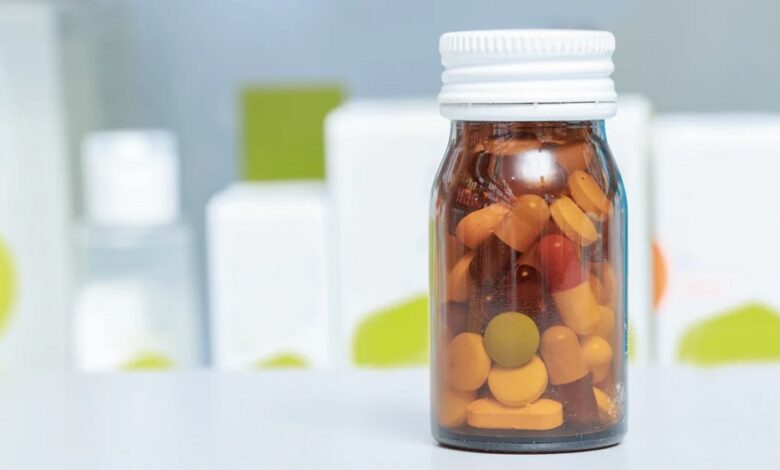
Manufacturers design supplement packaging with preservation in mind. Opaque plastic bottles and amber glass jars are engineered to block light, while the bottle material creates a barrier against air migration.
-
Leave Desiccants Inside: That small white packet or cylinder found inside your supplement bottle is a desiccant, usually filled with silica gel or bentonite clay. Desiccants actively absorb ambient moisture that enters the container when you open the lid. Never throw the desiccant packet away until you have used the entire contents of the bottle.
-
Keep the Lid Tight: Leaving a lid partially open or loose invites humidity and oxygen inside the container. Always screw caps down completely after retrieving your daily dose.
-
Avoid Transferring Products: While decorative glass jars look appealing on a kitchen shelf, transferring supplements out of their original opaque containers exposes them to light and compromises the airtight seal.
Recognizing Signs of Supplement Degradation
Even with proper storage, supplements can degrade over time. It is important to inspect your vitamins periodically for physical and olfactory changes that indicate breakdown:
-
Color Changes: Fading, dark spots, or significant discoloration often indicate oxidation or photodegradation.
-
Unusual Odors: A strong, sour, or rancid smell, particularly in fish oil softgels or herbal extracts, signals that the fatty acids or organic compounds have spoiled.
-
Textural Alterations: Powder that has hardened into solid clumps, capsules that feel sticky or soft, or tablets that crumble upon touch have suffered from excess moisture absorption.
-
Swelling: Capsules that appear puffy or distended indicate gas buildup from bacterial contamination or chemical reactions triggered by moisture.
If a supplement displays any of these characteristics, discard the product regardless of the printed expiration date.
Frequently Asked Questions
Is it safe to organize supplements into plastic pill organizers weeks in advance?
Organizing supplements weeks in advance can expose them to air, moisture, and light, especially if the pill organizer lacks an airtight seal or clear UV-blocking plastic. While organizing a single week of stable, dry tablets is generally safe, delicate items like softgels, probiotics, and hygroscopic powders should remain in their original containers with the desiccant packet until the day you consume them.
What happens if you take a supplement after its printed expiration date?
In most cases, taking a supplement past its expiration date is not directly toxic, but the product will have lost significant potency. Manufacturers set expiration dates based on stability testing to guarantee that the full dosage printed on the label remains active up until that date. Over time, vitamins and active compounds degrade, meaning an expired product may fail to deliver its intended nutritional value.
Can you freeze supplements to extend their shelf life beyond the expiration date?
Freezing supplements is generally not recommended unless explicitly stated by the manufacturer. Extreme cold can compromise the physical integrity of softgels and capsules, causing them to crack or leak. Furthermore, the thawing process creates significant condensation inside the container, introducing severe moisture damage that accelerates nutrient breakdown.
Do silica gel desiccant packets ever expire, and can you reuse them?
Silica gel packets gradually lose their ability to absorb moisture as they become saturated with water molecules from the surrounding air. While you should keep the original desiccant in your supplement bottle for its entire use, you should not transfer old desiccant packets into new bottles. New supplement bottles come equipped with fresh, fully active desiccants sized appropriately for that specific container.
How does living at a high altitude affect supplement storage?
High-altitude environments typically feature lower atmospheric pressure and significantly drier air. While lower humidity is beneficial for preventing moisture damage, lower atmospheric pressure can cause flexible softgels to expand or leak. If you live at high altitude, ensure softgels and liquid-filled capsules are kept tightly sealed in rigid containers kept at steady temperatures.
Is it safe to leave dietary supplements inside a hot vehicle overnight?
Leaving supplements in a car exposes them to extreme thermal shifts. Summer temperatures inside a parked car can quickly exceed 120 degrees Fahrenheit, which melts softgels, destroys probiotic cultures, and rapidly degrades heat-sensitive vitamins. Always remove your supplements from your vehicle immediately after purchasing or traveling.
How should expired or damaged dietary supplements be disposed of safely?
To safely dispose of degraded or expired supplements, mix the tablets or capsules with an undesirable substance like used coffee grounds or cat litter, place the mixture in a sealed plastic bag, and throw it into your household trash. Avoid flushing supplements down the toilet or washing them down the sink, as active ingredients can leach into local water systems and impact marine life.