Modern lifestyle habits have made poor posture one of the most widespread musculoskeletal issues today. Millions of people spend hours every day hunched over laptops, staring down at smartphones, or slumping in driver seats. Over time, these daily positions alter spinal alignment, weaken structural muscles, and tighten key muscle groups. The result is a cascade of physical problems ranging from chronic neck and back pain to tension headaches and shallow breathing.
While ergonomic chairs and standing desks can help, lasting posture improvement requires retraining the body itself. Regular yoga practice offers a comprehensive, time-tested approach to restoring structural alignment. By integrating targeted physical postures, deep muscle engagement, dynamic flexibility work, and heightened body awareness, yoga helps correct postural imbalances from the inside out.
Understanding the Physical Root Causes of Poor Posture
To understand how yoga transforms posture, it is essential to look at why poor posture develops in the first place. Posture is not simply a matter of remembering to sit up straight. It is the visible result of complex muscular balances and movement patterns across the entire body.
When you sit in a slouched position for extended periods, your body adapts to that shape. Certain muscles shorten and become chronically tight, while opposing muscles elongate and lose their strength. Musculoskeletal experts often refer to this dynamic as muscle imbalance.
-
Tight Chest and Hip Flexors: Constant sitting holds the hips in flexion and the shoulders rolled forward. Over time, the pectoral muscles in the chest and the iliopsoas muscles in the hips shorten, pulling the shoulders forward and tilting the pelvis out of neutral alignment.
-
Weak Back and Core Muscles: As the chest tightens, the muscles of the upper and middle back become stretched and weak. Similarly, the deep core muscles that support the spine relax, leaving the spinal column without sufficient active support.
-
Loss of Spinal Mobility: The spine is designed to curve naturally in an elongated S-shape. Slouching flattens or exaggerates these natural curves, stiffening the vertebrae and reducing overall spinal flexibility.
-
Proprioceptive Deficits: The brain gradually accepts slouched positioning as normal baseline posture. As a result, upright posture feels unnatural or exhausting because the body loses its subtle sense of spatial awareness.
Key Mechanisms Through Which Yoga Restores Postural Balance
Yoga works on posture through multiple interconnected pathways. Rather than isolating individual muscles, yoga poses engage functional muscle chains across the body, encouraging balanced strength, flexibility, and alignment.
Strengthening Core and Back Stabilizers
A healthy posture relies heavily on the postural muscles—the deep structural layers that work continuously against gravity. Poses such as Plank Pose, Locust Pose, and Bridge Pose target the transverse abdominis, multifidus, and erector spinae muscles. Strengthening these deep stabilizers creates a natural internal corset that holds the spine erect without excessive effort.
Opening Tight Anterior Muscle Groups
To reverse the forward-slump pattern, the front body must open up. Poses like Cobra Pose, Camel Pose, and Sphinx Pose gently stretch the chest, anterior shoulders, and hip flexors. By releasing chronic tension in these front-line muscles, the shoulders can slide back naturally into their proper sockets, and the pelvis can return to a neutral orientation.
Decompressing and Mobilizing the Spine
Movement patterns in yoga alternate between flexion, extension, lateral side-bending, and gentle axial rotation. Dynamic sequences like Cat-Cow Pose move every vertebra through its full range of motion. This movement stimulates the circulation of synovial fluid around the spinal joints, lubricates the intervertebral discs, and alleviates the compression caused by gravity and prolonged sitting.
Cultivating Proprioception and Mindful Body Awareness
Perhaps the most distinctive aspect of yoga is its emphasis on mindful attention. Through detailed cues on alignment—such as grounding through the feet, lengthening the crown of the head upward, and softening the rib cage—practitioners build heightened proprioception. This refined sensory awareness translates directly into daily life. You begin to notice slouched postures instantly during work or household tasks and can correct your posture before strain sets in.
Essential Yoga Poses for Posture Correction
Integrating specific yoga postures into a daily or weekly routine provides targeted relief for common postural distortions. The following postures address key components of proper alignment.
-
Tadasana or Mountain Pose: Tadasana is the foundational standing posture for all posture work. Standing with feet grounded, knees ungrounded, pelvis neutral, chest lifted, and shoulders relaxed teaches the nervous system what true vertical alignment feels like.
-
Bhujangasana or Cobra Pose: Performed lying face down, this gentle backbend strengthens the entire posterior chain, including the upper back, latissimus dorsi, and gluteal muscles, while simultaneously stretching the chest and abdomen.
-
Setu Bandha Sarvangasana or Bridge Pose: Bridge Pose targets weak glutes and hamstrings while opening the hip flexors and thoracic spine. It counteracts the tight-hip, weak-glute pattern associated with prolonged sitting.
-
Adho Mukha Svanasana or Downward-Facing Dog Pose: This classic pose stretches the calves, hamstrings, and shoulders while strengthening the upper back and deep core. It elongates the entire posterior spine from heels to neck.
-
Uttana Shishosana or Puppy Pose: Acting as a bridge between Child Pose and Downward-Facing Dog, Puppy Pose offers a deep stretch for the chest, upper back, and shoulders, helping melt away upper-body tightness.
-
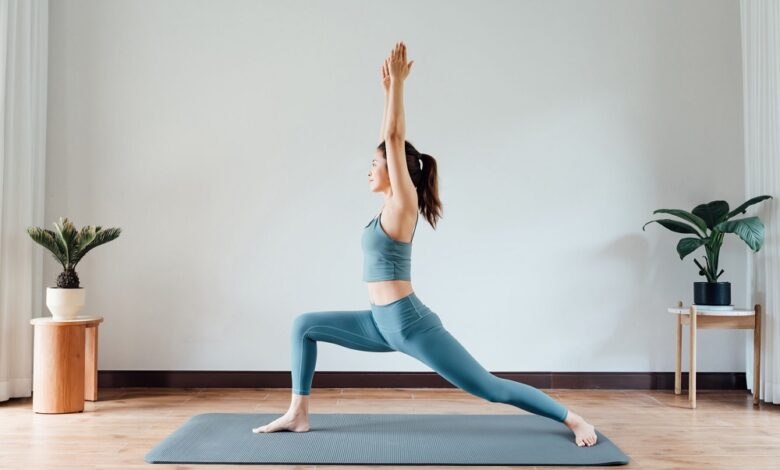
Anjaneyasana or Low Lunge: By stepping one foot forward and lowering the back knee, this pose deeply stretches the hip flexors and quadriceps of the trailing leg, helping restore a neutral pelvic tilt.
The Vital Role of Breath Work in Postural Alignment
Pranayama, or controlled breathing practice, plays an integral role in improving posture through yoga. The diaphragm, which is the primary muscle of respiration, connects directly to the lumbar spine, core abdominal wall, and rib cage.
When you slump, your thoracic cavity compresses, forcing shallow chest breathing. This restricted breathing pattern limits diaphragm movement, stresses secondary respiratory muscles in the neck and shoulders, and reinforces upper-body tightness.
During yoga, deep diaphragmatic breathing expands the lungs in three dimensions, lifting the rib cage off the pelvis and encouraging thoracic spine extension. Deep inhalation creates internal pressure that supports the spine from within, while focused exhalation helps release chronic muscle tension around the neck and upper shoulders. Over time, practicing deep breathing reorganizes the respiratory mechanics needed to maintain an effortless upright spine.
Integrating Postural Yoga Practices into Daily Routines
Achieving durable improvements in posture does not require hours of intense yoga practice every single day. Consistency is far more effective than intensity when retraining structural habits.
To incorporate posture-supporting practices into a busy daily schedule, consider these actionable steps:
-
Start with Short Morning Sessions: Dedicate ten to fifteen minutes every morning to gentle spinal mobility exercises like Cat-Cow Pose, Gentle Cobra, and Mountain Pose to wake up postural muscles before starting work.
-
Take Micro-Breaks Throughout the Day: Use short, two-minute breaks during desk work to stand up, practice Mountain Pose, or do standing chest openers.
-
Focus on Quality over Depth: In any posture, prioritize long, neutral spine alignment over how deeply you can bend or stretch. Forcing a pose can cause compensatory slouching.
-
Combine Active Postures with Restorative Poses: Balance active strengthening postures with restorative stretches, such as lying over a rolled towel or bolster positioned under the upper back to open the chest passively.
By treating posture as an ongoing, mindful process rather than a static goal, yoga provides a sustainable path toward a strong, flexible, and pain-free spine.
Frequently Asked Questions
How long does it take to see improvements in posture from practicing yoga?
Initial benefits, such as reduced muscle tension and greater body awareness, are often noticeable within two to three weeks of consistent practice. Structural changes—such as strengthened back muscles, lengthened chest fibers, and automatic upright habits—typically take two to three months of regular practice, two to three times per week.
Can yoga help correct severe postural issues like hyperkyphosis or forward head posture?
Yoga is very effective at relieving functional postural distortions caused by muscle weakness and tight connective tissues, including mild to moderate upper back roundedness and forward head positioning. However, structural bone changes or medical conditions like severe scoliosis require consultation with a physical therapist or medical specialist alongside any yoga routine.
Is dynamic flow yoga or slow hold yoga better for correcting posture?
Both styles offer unique advantages. Slow hold styles like Hatha or Restorative yoga allow time to refine alignment, build endurance in postural muscles, and lengthen tight tissues. Dynamic styles like Vinyasa build functional strength, core stability, and overall body coordination. A balanced routine incorporating both yields the best results.
Should beginners avoid deep backbends when trying to fix their posture?
Beginners should approach deep backbends cautiously. Intense backbends can lead to compression in the lower back if the upper back and shoulders lack mobility. Starting with gentle, supported back extensions like Sphinx Pose, Low Cobra, or Bridge Pose builds the necessary upper back strength and flexibility safely.
How does proper pelvic positioning affect overall posture during yoga?
The pelvis serves as the foundation for the entire spinal column. If the pelvis tilts too far forward or backward, the spine compensates by increasing its lumbar or thoracic curves. Learning to find a neutral pelvic position in standing and seated yoga poses ensures that the spine stays properly aligned from its base upward.
Can practicing yoga worsen posture if done incorrectly?
Practicing yoga with poor form or forcing movements can reinforce bad habits. For example, rounding the upper back during forward folds or collapsing into the lower back during backbends can strain ligaments and aggravate existing imbalances. Focusing on proper alignment principles and working with a certified instructor helps prevent these issues.
Do men and women experience different postural challenges that yoga can address?
While the fundamental muscular mechanics are the same, lifestyle and anatomical factors can create distinct tendencies. Women often experience postural strain in the upper back from carrying shoulder bags or changes during pregnancy, while men frequently present with severe tightness in the hamstrings and hips from weightlifting or sitting. Yoga addresses both patterns by balancing strength and flexibility according to individual needs.